 Best Tips and Tutorial for Wordpress Blogger with Plugins, Widgets, premium themes, SEO tricks and social media.
Google Zeitgeist : Exploring the significant parts of each year
Much can change in just a year, and for a vast and colorful world like ours, lots of things can rise and fall out of fame, cause interest and eventually get forgotten. That’s why we often try to summarize years at their very end – you see that on every type of public media we have – from newspapers to television stations worldwide. But what about the Internet ? Here’s where Google Zeitgeist comes in.
Google Zeitgeist was first launched in the distant 2001, as an attempt of Google to provide Top 10 searches of that year, showing what the public was most interested in according to the statistical information gathered by the search engine’s servers. This practice has been growing stronger each year, providing loads of more useful and interesting information to the viewers, and it has also become a trustworthy source for many writers from around the world, as a tool to provide statistical information about the important things from the year.
What a strange name … what does it mean ?
It’s very easily understandable by those who have studied even just a year of German. The etymology of it comes from Zeit (time) and Geist(spirit) , making it a composite word meaning “the spirit of time”. This phrase is often used to reflect the intellectual and cultural signature of a certain age.
Why is it special?
Unlike TV summaries, where you get the opinions of reporters and news writers, which even in their best attempts are sometimes just a little bit biased, Google Zeitgeist offers you a way to peak into an entire year, based on the things that made people search. In an essence, it comes directly from the source, as opposed to TV summaries, which are more or less based on what the editor offers you.
Some features of Google Zeitgeist
Zeitgeist has seen a lot of evolution over the years, so for the purposes of this tutorial we have chosen the featureful 2011 Zeitgeist edition. Perhaps 2012 will be a lot more functional and interesting , but we’ll see when it comes out.
- View the “spirit of time” by country, by selecting it on the left. This will bring a more local outlook if you want to check not for the whole world , but for your country in particular. Maybe you’re interested whether others find the same things interesting ? You can verify and check that with Zeitgeist.
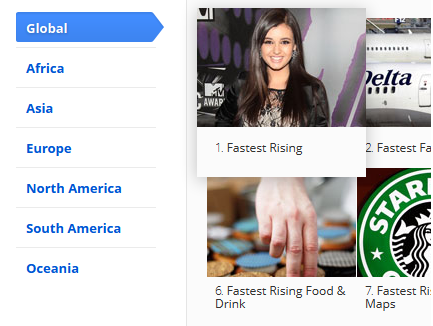
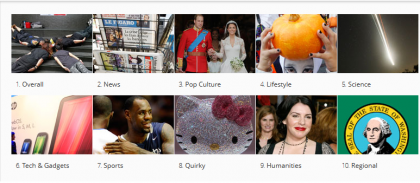
- View information categorized in different areas of human interest. Those could be many and different – anything from celebrities, events, brands, famous businessmen , news , “what is” pages … nearly everything you could think that could be searched. This provides users with a way to find out more information about whatever they’re interested in , and they can do it in less clicks, since it’s optimized for their viewing comfort.
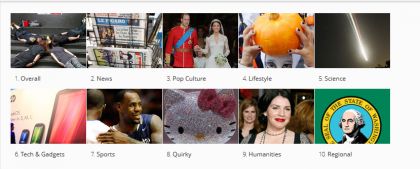
- Different factors to consider when related to the searches. Inside the category, Zeitgeist will allow you to see lists according to many characteristics – fastest rising search terms, fastest falling, top videos, most image searches … nearly anything that is very useful to learn about the particular phenomenon (person, item, event or idea) that has been searched for.
- Sort through detailed statistics for each item, monthly – this is one of the top and best features of the current Zeitgeist, compared to those before. It can now represent monthly values in a very understandable , graphical way which is intuitive even for those visitors with a shorter attention span. It’s incredible, simply put, and it’s present for every item you can see on Google Zeitgeist. Even weekly information is available with a single click on this amazing graph.
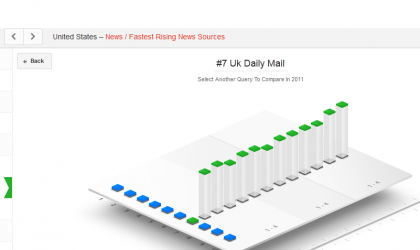
So to put things in perspective, there’s a lot you can learn exploring Google Zeitgeist. And you can put it to practical tasks too – whether you want to analyze trends at the end of the year or you want some interesting and spicy info for your content, Google Zeitgeist is there for you.